
Here are the Florida spiders most residents worry about, the brown recluse, is barely present in the state, while the spider that’s actually native and venomous, the widow, gets comparatively little attention. That gap between fear and fact is the real story of Florida spiders. Three widow species are native to Florida and a fourth has spread here from elsewhere, and together they’re the only spiders in the state with venom considered medically significant. Everything else homeowners run into, wolf spiders, jumping spiders, banana spiders, and the rest, is harmless. This guide sorts out which is which.
Key Takeaways
- Widow spiders are the only spiders native to or established in Florida with medically significant venom: the southern black widow, northern black widow, and red widow are native, and the brown widow arrived from elsewhere and has since spread statewide.
- No recluse spider species is established in Florida. Confirmed sightings are rare and limited to a handful of counties, and most “recluse bites” reported by homeowners turn out to be something else entirely.
- Most Florida spiders, including wolf spiders, jumping spiders, and golden silk orb-weavers, are harmless and spend their time controlling other insects rather than bothering people.
Florida’s Four Widow Spiders
University of Florida IFAS Extension has documented four widow species in the state, and all four share the same basic build, a shiny, bulbous abdomen and a messy, tangled web, though the markings and habitat differ enough to sort them out.
Southern Black Widow
The southern black widow is glossy black with a red or orange hourglass marking on the underside of the abdomen. It’s the widow species Floridians run into most, typically outdoors in dark, undisturbed spots like woodpiles, rock piles, and stacked boards.
Northern Black Widow
The northern black widow shares the same glossy black coloring, but its red marking usually appears broken into separate spots instead of one connected hourglass, the fastest way to tell the two black widows apart.
Red Widow
The red widow stands apart from the other three, with a reddish-orange head and legs and a black abdomen marked in red and yellow rather than the usual black-and-red hourglass pattern. It’s found only in Florida’s scrub habitat and is rarely encountered even there.
Brown Widow
The brown widow runs mottled tan to dark brown instead of black, with an orange-to-yellow hourglass rather than red. Even without spotting the spider itself, its egg sac gives it away: small pointed spikes cover the surface, unlike the smooth, rounded egg sacs the other three widows produce.
Brown Recluse Spiders Are Rare in Florida
Ask around and the brown recluse comes up constantly, blamed for mystery bites, bacterial infections, and skin wounds of every kind. The reality is that no recluse species has ever been confirmed as an established population in most of Florida. The handful of confirmed sightings involve three related species, brown recluse, Chilean recluse, and Mediterranean recluse, and even those tend to stay confined to a single building in a scattered county or two rather than spreading. Homeowners, doctors, and veterinarians all misdiagnose unrelated conditions as recluse bites on a regular basis, largely because none of them are trained in spider identification. If a recluse spider genuinely does turn up, it carries a violin-shaped marking on the head region and has six eyes arranged in three pairs, rather than the eight most other spiders have.
Widow Spider Bite Symptoms
A widow bite typically starts as a sharp pinprick, followed within one to three hours by muscle cramping that often spreads to the shoulders, thighs, or back. Left untreated, symptoms can progress to elevated blood pressure, nausea, sweating, and difficulty breathing, though the reaction varies by species and by how much venom was injected. G.B. Edwards, an arachnologist with the Florida State Collection of Arthropods, has found brown widow venom to test more potent than black widow venom in concentration, even though brown widow bites tend to produce milder symptoms overall. Any suspected widow bite is worth medical attention, since treatment options like calcium gluconate can address symptoms directly.
Common Spiders That Aren’t Dangerous
Most spiders found in and around Florida homes fall well outside the medically significant category, and a few are common enough to be worth knowing on sight.
Wolf Spiders
Wolf spiders are large, fast-moving, and often mistaken for something dangerous because of their size. They hunt on foot rather than building webs and aren’t aggressive toward people.
Jumping Spiders
Jumping spiders stay small and compact, often in bright patterns, and get around in short, precise jumps rather than webs. They’re harmless and among the easiest spiders to observe up close without concern.
Huntsman Spiders
Huntsman spiders rank among the largest in Florida, with a leg span that can reach several inches. Their size makes them the most alarming spider most people will ever see indoors, despite posing no real threat.
Golden Silk Orb-Weavers (Banana Spiders)
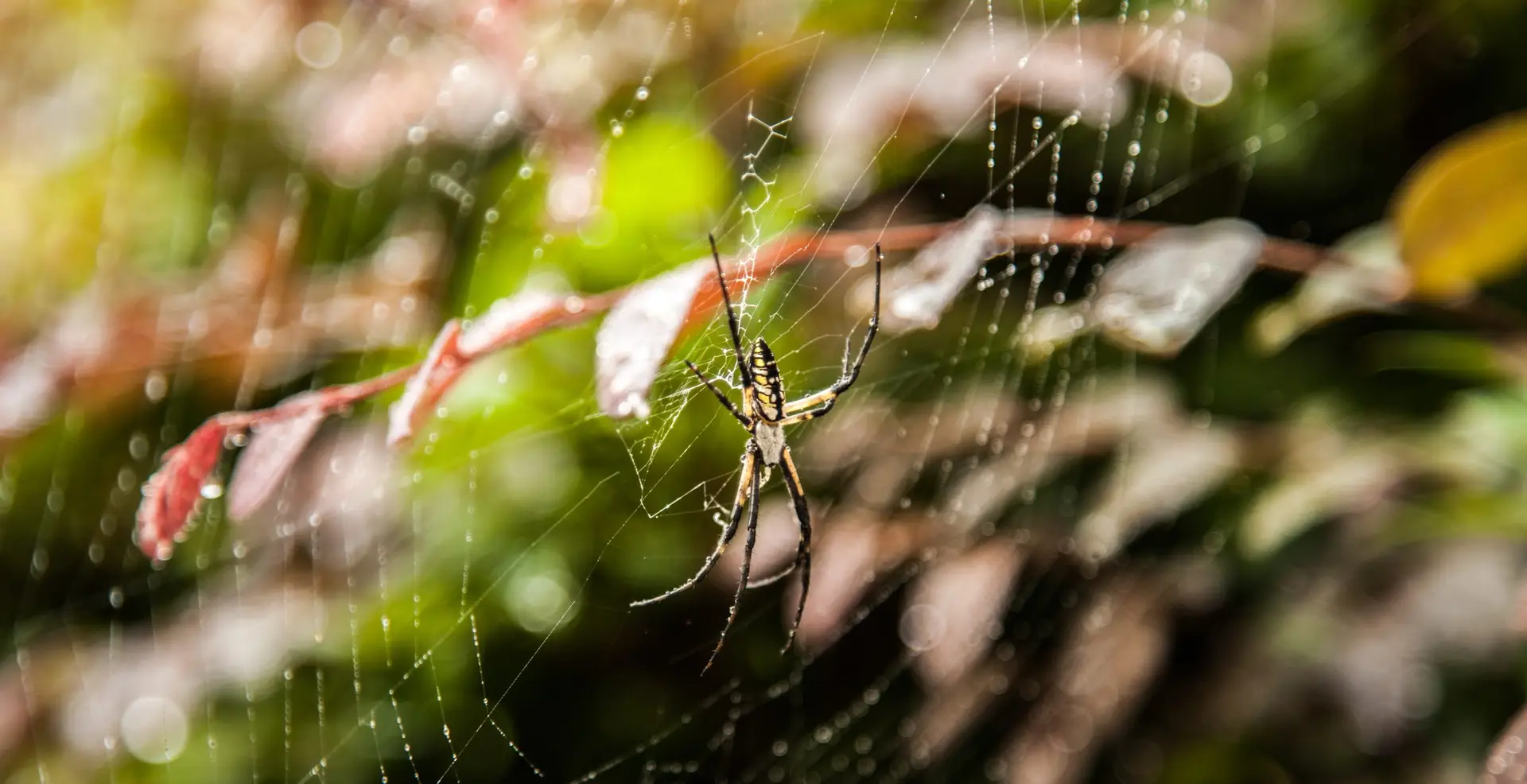
Golden silk orb-weavers, with their large bodies and yellow legs, build the substantial webs strung between trees and across yards that people notice most. They’re worth leaving alone, since they catch a steady stream of flying insects.
Common House Spiders
Common house spiders run small, brown or gray, and turn up indoors more often than almost any other species, typically tucked into corners, basements, or attics.
Orchard Orb Weavers
Orchard orb weavers stay small and carry bright orange spots that occasionally get them mistaken for a widow spider, though the body shape and web style are different. None of these six species build the kind of concentrated, undisturbed hiding spots that widow spiders favor, which is part of why they rarely factor into an actual pest problem.
Where Widow Spiders Hide and How to Avoid a Bite
Widow spiders don’t attack unprovoked. Bites happen almost exclusively when a spider gets trapped against skin, most often when a hand reaches into a woodpile, a storage box, or a pair of shoes or gloves that have sat unused for a while. That means the areas worth checking before reaching in are garages, sheds, stacked firewood, outdoor equipment, and the crevices of trash cans, exactly the dark, undisturbed spots widows prefer. Wearing gloves for yard work involving any of these, and shaking out clothing or footwear that hasn’t been worn recently, closes off most of the situations where an accidental bite actually occurs.
Keeping Spider Activity Down
Spiders follow their food source, so reducing insect activity does more long-term good than clearing webs on their own. Regular vacuuming, including egg sacs and old webbing, discourages resettling in the same spots. Moving firewood, building materials, and debris away from the foundation removes outdoor hiding places, and switching exterior lights to warm or yellow bulbs cuts down on the insects that draw spiders toward entry points in the first place. Sealing cracks around doors, windows, and utility lines closes off the routes both spiders and their prey use to get inside.
Get Spider Control for Your Central Florida Home
Not sure if what you’re seeing is a widow or one of the harmless look-alikes? Rowland Pest Management has handled spiders as part of its general pest control service across Central Florida since 2015, backed by a 4.9-star rating across more than 900 reviews. A technician inspects entry points, webs, and likely hiding spots, then treats both the spiders and the insect activity drawing them in, with a follow-up visit included at no extra cost if activity continues. New customers get $50 off their first visit. Visit Rowland Pest Management or contact the team to schedule a free inspection.
Frequently Asked Questions
What is the most dangerous spider in Florida?
Widow spiders are the only spiders native to or established in Florida with medically significant venom. The southern black widow is the most commonly encountered of the four, though all warrant caution.
Are brown recluse spiders actually found in Florida?
Not as an established population in most of the state. Confirmed sightings are rare and limited to a handful of counties, and most bites blamed on recluse spiders turn out to be misdiagnosed skin conditions or something else entirely.
How can I tell a black widow from a brown widow?
Color is the fastest clue: black widows are glossy black with a red hourglass marking, while brown widows are mottled tan to brown with an orange or yellow hourglass. The brown widow’s spiky, tufted egg sac is also a reliable giveaway even when the spider itself isn’t visible.
Is a widow bite actually dangerous, or mostly just painful?
It depends on how quickly it’s treated. Left alone, a bite can progress from a sharp pinprick to muscle cramping and, in more severe cases, elevated blood pressure and nausea, but calcium gluconate and other treatments handle symptoms effectively once a doctor is involved.
Do I need to worry about every spider I see in my house?
No. Widows are the exception, not the rule. Species like wolf spiders, jumping spiders, and golden silk orb-weavers make up the majority of what people encounter, and all of them are harmless and generally beneficial to have around.