

Wood-destroying insects are a common concern in Casselberry, where warm weather keeps pests active year-round. When insects show up near decks, trim, or other wooden structures, it can be hard to tell what they are.
Carpenter ants and termites are often confused because both infest wood and remain hidden in walls, crawl spaces, and other areas. Damage can build long before you notice it.
This guide explains how to tell them apart, the damage they cause, and the signs to watch for.
Key Takeaways
- Carpenter ants vs termites look similar but have clear physical differences. Carpenter ants have a narrow waist and bent antennae, while termites have straight antennae and thicker bodies.
- Each pest damages wood differently. Carpenter ants tunnel through wood to build nests, while termites feed on cellulose inside wood.
- Certain warning signs can reveal which pest is present. Mud tubes often point to termites, while piles of sawdust or wood shavings may indicate carpenter ants.
- Early identification helps prevent further damage. Professional pest control services can confirm the pest and recommend effective treatment for your home.
Carpenter Ants Vs. Termites: Key Differences
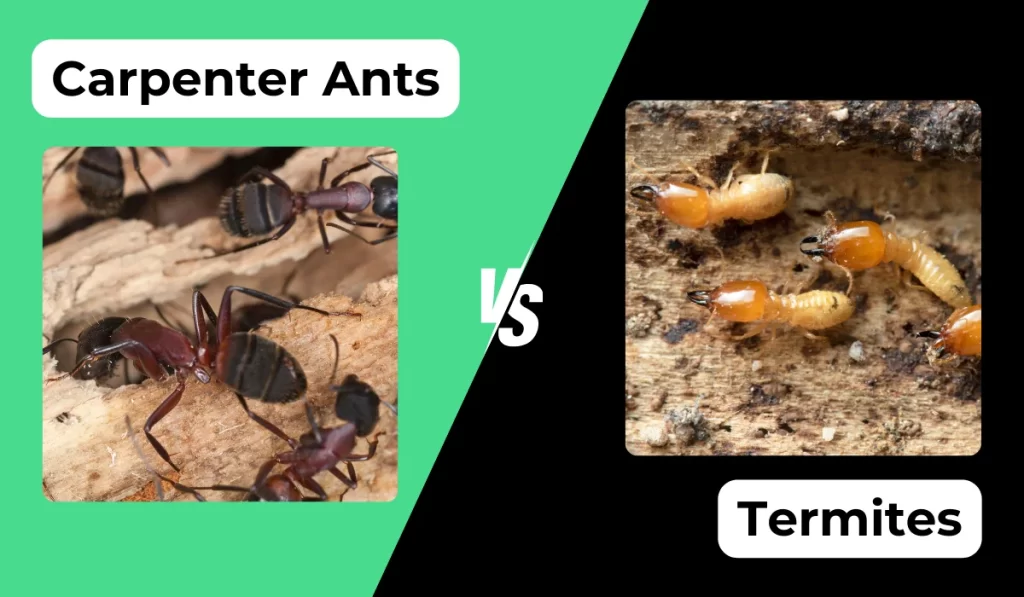
Correct identification helps with effective pest control. Knowing how termites differ from carpenter ants can help you choose the right treatment plan.
Body Shape, Color, and Waist
One of the clearest differences is body shape. Carpenter ants have a narrow waist between body sections. Termites do not. Their bodies look straighter and more even.
Color is another clue. Carpenter ants are often dark brown or black. Worker termites are usually creamy white. These physical characteristics make it easier to spot the difference when you see live insects.
Antennae and Wing Shape
The antennae are another strong clue. According to the University of Maryland Extension, carpenter ants have bent antennae while termites have straight antennae.
Wing shape also matters when swarmers appear. Ant swarmers, or winged ants, have two sets of wings, but the front pair is longer than the hind wings.
Termite swarmers also have two sets of wings, but both sets are the same length. Because termite swarmers have equal wing sizes and ant swarmers do not, termite wings and ant wings look different after a swarm.
What Swarmers Tell You
Both pests create swarmers when the colony is ready to grow. These insects leave to start a new colony. People usually notice a problem indoors when these swarmers appear.
If you find equal wings near a window, they may be termite wings. If the wings are uneven, they may be from ant swarmers. Mixing up wing shape is one of the most common ways signs of termites are mistaken for signs of carpenter ants.
What Each Pest Does to Wood
Carpenter ants and termites are both found around wood, but they cause damage in different ways. This difference can help identify which pest is present.
Carpenter Ant Damage
Carpenter ants do not eat wood. They dig through wood to build a nesting space. They often choose moist wood or rotting wood because it is softer and easier to tunnel through.
As they dig, they push out frass. This debris can look like sawdust, wood shavings, or small piles. You may find it near baseboards, trim, decks, or window frames. A carpenter ant infestation also may spread through wall voids, crawl spaces, and other damp areas.
However, the Pennsylvania State University notes that carpenter ant activity may cause damage over time. The level depends on conditions and infestation size.
Termite Damage
Termites do eat wood. Termites feed on cellulose found in wood and other plant material. Wood is one of their main food sources.
A termite colony can feed for a long time without being noticed. Over time, termite damage can weaken beams, trim, flooring, and other wood structures. In a severe termite infestation, feeding can lead to significant damage to key parts of the home.
Where Termites Usually Nest
Subterranean termites are common in Central Florida. They live in the soil and move into homes from the ground up. To stay protected, they build mud tubes between the soil and the wood they are using for food.
Drywood termites act differently. They live right inside the wood and do not need soil contact. Because drywood termites live inside wood and do not need soil, they can infest trim, attic framing, furniture, and other wood structures higher in the home.
Which One Fits Your Signs
The signs around your home can show whether carpenter ants or termites are present. Recognizing these clues is the first step in identifying the pest.
Piles of Sawdust or Frass
Carpenter ants leave piles of sawdust or frass, but you should also check other signs to identify them correctly. These insects push debris out as they expand their tunnels. That waste often collects under trim, around windows, or near damp wood.
These are clear signs of carpenter ants. If you also notice activity in crawl spaces or wall voids, a carpenter ant infestation becomes even more likely.
Mud Tubes and Hidden Feeding
Mud tubes are one of the strongest signs of termites. Subterranean termites build them along foundations, supports, and other surfaces so they can travel from the soil to wood while staying moist.
If you see mud tubes, it likely means termite activity and should be checked by a pest control professional. Even if tubes look empty, they can still point to a nearby termite colony or active termite infestation.
Swarmers and Discarded Wings
Termite swarmers usually leave equally shaped wings behind, while ant swarmers leave uneven wings because their front wings are longer than their hind wings.
Discarded wings are a strong clue. They can help show whether you are looking at carpenter ants vs termites, even before an inspection starts. When you pair that clue with damaged wood, frass, or mud tubes, the picture becomes much clearer.
Schedule an Inspection to Confirm and Plan Treatment
It is not always easy to tell the difference between carpenter ants and termites. Both pests can stay hidden for long periods and spread through areas you may not check often. When a carpenter ant or termite infestation grows unnoticed, it can lead to wood damage and costly repairs quickly.
At Rowland Pest Management, we provide professional pest control services for homeowners in Casselberry and across Central Florida. Our pest control professionals can identify carpenter ants, subterranean termites, drywood termites, and other wood-destroying insects.
We inspect crawl spaces, wall voids, and other hidden areas to locate pest activity and recommend effective treatment.
Contact us today to schedule an inspection or speak with our team about your pest concerns.
FAQs
How can I tell if I have carpenter ants or termites?
Check body shape, antennae, and wings. Carpenter ants have a narrow waist, bent antennae, and uneven wings. Termites have straight antennae, a thicker body, and equal wings. Mud tubes suggest termites, while frass or piles of sawdust suggest carpenter ants.
What do carpenter ants eat if they do not eat wood?
Carpenter ants do not eat wood. They tunnel through it to make nesting space. Their food sources usually include sweets, proteins, and other foods they find indoors or outside. That is why you may see them in kitchens and near moist wood.
When should homeowners call a pest control company?
Call a pest control company as soon as you notice signs that point to a termite colony or a carpenter ant infestation. Pest control experts can deliver a quick inspection to identify the pest you’re dealing with and recommend the appropriate treatment plan for effective control.