
It always starts small. One tiny ant crawls across your kitchen counter like it owns the place. The next day, a whole trail is marching straight to your cereal box. Before you know it, you’ve got a sugar ant infestation on your hands.
If you’ve found yourself with this ant problem, you’re not alone. Sugar ants are among the most common pests in Central Florida homes, typically invading homes every spring and summer. In this guide, we’ll show you how to identify them, how to get rid of sugar ants, and how to stop them from coming back.
Key Takeaways
- Sugar ants are drawn to sweet foods, moisture, and easy entry points. This makes kitchens and bathrooms their top targets in Central Florida homes.
- Eliminating sugar ants requires effective control. You need to eliminate the entire colony, not just the visible ants. Proper cleaning, sealing, and baiting can rid you of ants permanently.
- Ant bait with borax or Terro is effective against ants. These ant killers work well because they trick worker ants into eliminating the entire colony.
- Persistent sugar ant problems often require professional help. Home remedies will not tackle the root cause of your home’s ant problem.
What are Sugar Ants?
People often call any small ants that go after sweet food “sugar ants”. However, in Florida, several types of ants fit this description. Odorous house ants, pavement ants, and pharaoh ants usually invade kitchens and bathrooms in search of sugar.
So, how exactly can you tell sugar ants from other ants?
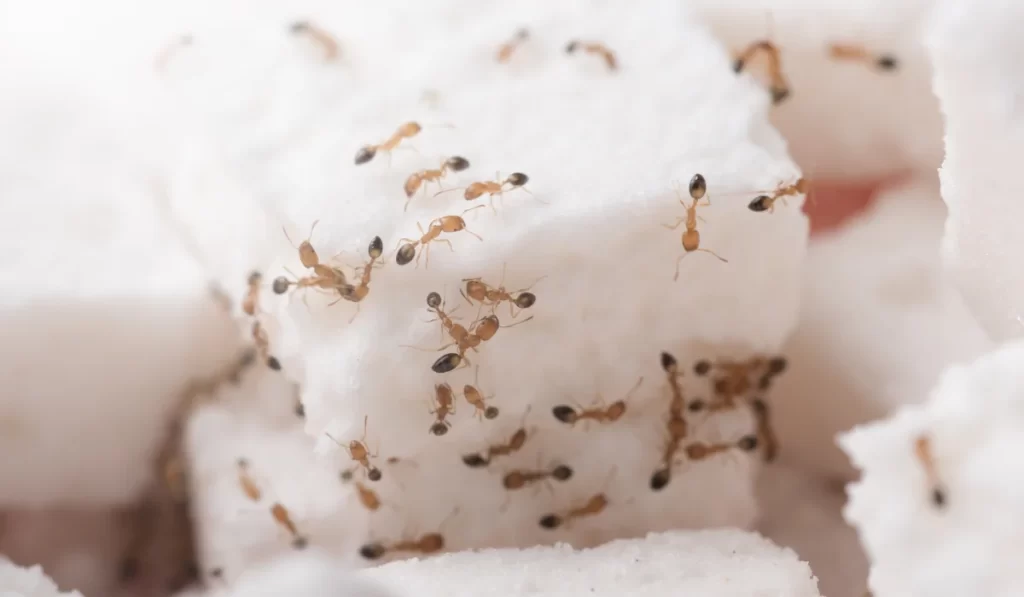
First of all, sugar ants are tiny. They are so small that they measure under 1/8 of an inch, making them hard to spot, even if they have a black or brown color. This particular ant species is drawn to warm, damp spots with easy access to food. You’ll often spot them crawling along countertops, slipping into cracks, or lining up near baseboards.
Another clue for identifying sugar ants is their trail. These ants leave ant trails using pheromones that guide the colony precisely to their sugary food sources.
Why You’re Seeing Sugar Ants in the House
Sugar ants act fast when they find easy food and shelter. If your home offers either, they won’t hesitate to move in. You may be inadvertently inviting them. Some ways you could be inviting a sugar ant problem to your home include:
- Crumbs, spills, or sweet foods left out: Sugar ants quickly swarm exposed food, especially anything sweet, such as juice, honey, or baked goods. Even small spills or forgotten crumbs can attract a steady trail of ants.
- Leaky pipes or damp areas under the sink: Like termites, ants search for wet areas to survive. Water-damaged spots provide both hydration and a place to rest.
- Unsealed entry points around doors, windows, or baseboards: Sugar ants slip through even the tiniest crevices.
- Gaps in caulk or unsealed crevices: These ants follow an invisible scent trail thanks to their pheromones. These trails can lead straight through walls and baseboards. If crevices are left open, the colony may continue to return even after treatment.
- Florida’s climate: The warm, humid weather in Florida creates perfect conditions for sugar ants to breed and forage year-round. Without prevention, sugar ant infestations can grow fast and spread quickly.
How to Get Rid of Sugar Ants
Now that you know what invites sugar ants into your home, it’s time to talk about ant control. You can try several home remedies to control the infestation.
However, if your goal is to eliminate your home’s ant problems for good, we’ll also explain what you can expect from professional pest management.
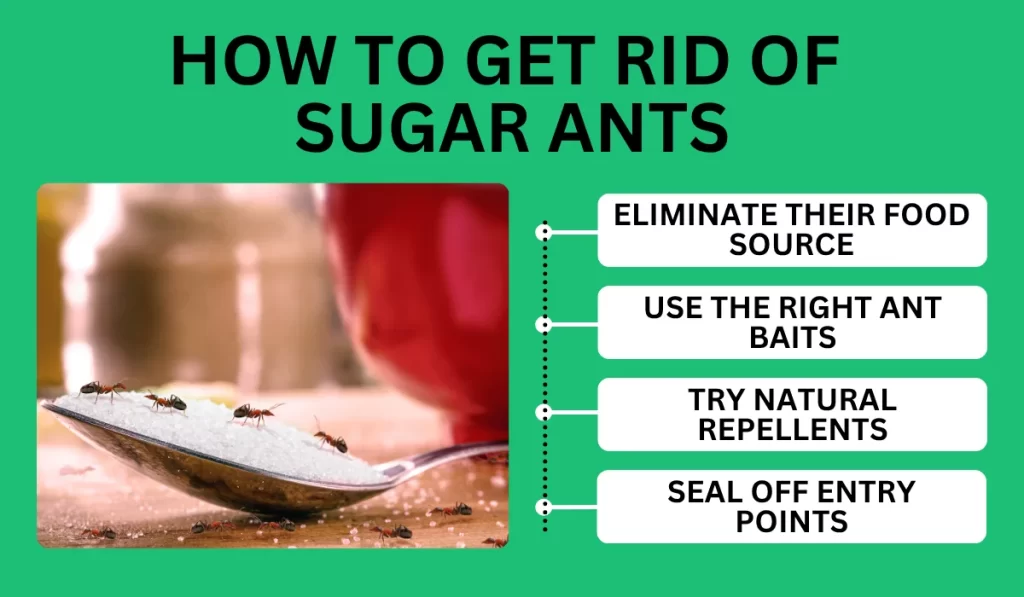
1. Eliminate Their Food Source
A thorough cleanup can help you eliminate ants. Cleaning up your home can cut off ants’ food source and discourage them from building an ant nest in your home. You can do this by:
- Wiping down countertops with white vinegar to remove their scent trail
- Storing food in airtight containers
- Washing dirty dishes in the sink and disposing of food scraps properly
- Sweeping and mopping regularly
2. Use the Right Ant Baits
Use ant bait if you want to get rid of ant colonies, not just the ants you see scurrying across your countertop. The following methods work by targeting the source of the problem:
- Use bait products like Terro or borax-based baits. Worker ants will carry the poisoned bait back to the ant nest and share it with the rest of the colony.
- Place bait stations near ant trails. Ensure they are kept away from children and pets. Bait stations can take a while to take effect. Avoid spraying repellents to kill ants while waiting for results to avoid disrupting the trial.
3. Try Natural Repellents
There are also eco-friendly ways you can get rid of ants. Some homeowners swear by several home remedies against ant infestations. Some DIY or natural repellents you can try include:
- Peppermint or other essential oils diluted in a spray bottle
- A mix of boric acid and sugar water
- Bay leaves placed in cabinets or near entry points can serve as a deterrent for sugar ants.
- A sprinkle of diatomaceous earth around windows or baseboards
Keep in mind that DIY solutions often offer temporary freedom from ant problems. These home remedies may not always address the root of the problem. A proper treatment from a pest control service is still recommended for permanent elimination.
4. Seal Off Entry Points
After you’ve successfully reduced the ant population in your home, it’s time to work on how you can prevent sugar ants from returning. Some ways you can deter a repeat infestation without having to kill ants include:
- Resealing around windows and doors with caulk
- Repairing torn window screens
- Fixing leaks or drips under sinks
- Storing sugary foods and snacks in sealed containers
When to Call a Pest Control Company
When ants continue to return to your home after you’ve tried every DIY solution, it’s time to consult with professional exterminators. Some ant problems may worsen and involve multiple types of ants, like carpenter ants, fire ants, or black ants. Situations like this are best left to the professionals.
At Rowland Pest Control, we understand the frustration that an ant infestation can cause. Our team identifies the ant species, locates the ant nest, and applies targeted solutions that work. Additionally, we specialize in serving Central Florida communities, including Orlando, Winter Garden, and New Smyrna Beach, so we understand the challenges we face.
Final Thoughts
Don’t brush off the presence of sugar ants in your house as a nuisance. Take their presence as a sign that something in your home is attracting them. You can solve this problem through the right combination of cleaning, strategic baiting, sealing entry points, and effective prevention.
We at Rowland Pest Management are ready to help you reclaim your kitchen from ants. Whether your ant problem is in your home kitchen or office kitchen, our exterminators will efficiently and safely eliminate any existing infestation. We can also work with you to protect your home and business from any future pest problems. Contact us today for a free quote!
FAQs
What attracts sugar ants to my house?
Sugar ants search for sweet foods, moisture, and safe places to nest. Little things, such as spills and crumbs left on your countertop, leaky pipes, and unsealed containers, are all magnets for these tiny invaders.
What is the best way to get rid of sugar ants?
Use ant bait that worker ants carry to the colony to eliminate the source of your infestation. Combine this with regular cleaning and sealing entry points for best results.
Are sugar ants dangerous?
Not usually. Sugar ants don’t sting or bite like fire ants. However, they can contaminate food and become a significant nuisance if not adequately addressed.
How can I prevent sugar ants from returning?
Store food in sealed containers, fix leaks, and seal cracks or crevices around your home. Regular pest control service will help you protect your home year-round.