
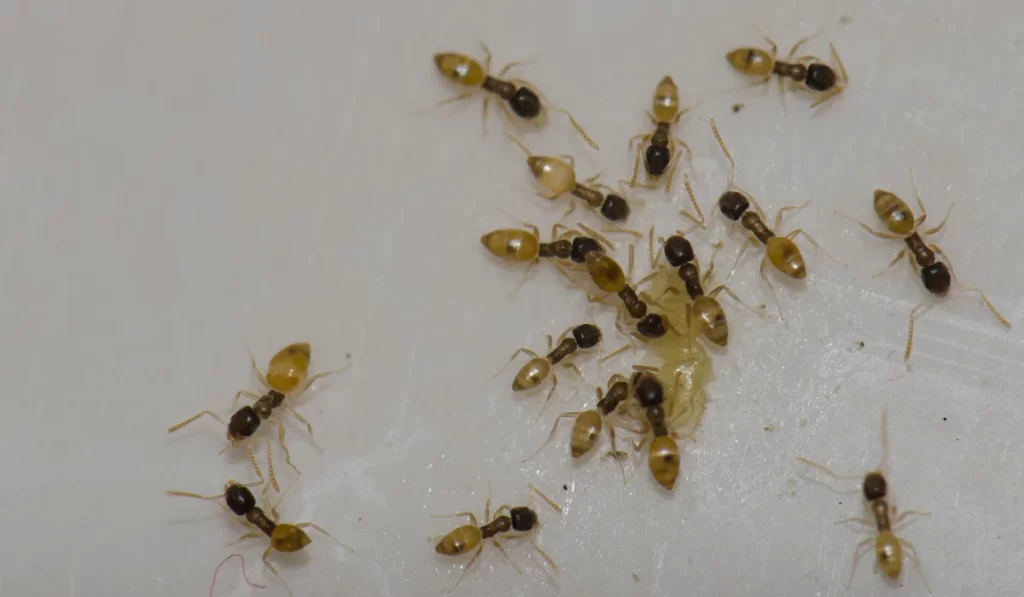
If you live in Florida, you’ve likely seen ghost ants in your bathroom. These tiny ants have a pale body and dark head, and they’re easy to miss. Once inside, they race along sinks, tubs, and baseboards looking for water and sweet residue.
In Central and South Florida, bathrooms are perfect for ghost ants. They hide in wall voids and cracks by day, then trail to sinks, showers, and even toothpaste at night.
This guide explains why ghost ants target Florida bathrooms, how they spread, and why many DIY fixes fail. You’ll also see simple home steps and the pro treatments that actually clear the colonies.
Key Takeaways
- Ghost ants love moisture and sweets. Florida bathrooms often have leaks, condensation, and sticky residue from toothpaste or soap, making them prime spots for these ants.
- They don’t live in one nest. When disturbed, ghost ants “bud” into many small nests, so repellent sprays often make the problem spread.
- IY fixes rarely stop ghost ants. Repellent sprays scatter workers, and the wrong ant bait won’t reach the nest. Pros use sweet baits that the ants carry back to their nests.
- Prevention helps, but treatment matters most. Seal gaps, store items tightly, and reduce moisture. For complete removal, a professional bait plan is most effective.
Why Bathrooms Attract Ghost Ants in Florida
Ghost ants are a year-round problem in Florida. They often move indoors, and bathrooms attract them with steady water and shelter near the bathroom sink and tub.
They thrive in moist spots. Even a slow drip under the sink can feed a colony. They trail along baseboards, cracks, and grout, slipping into tiny gaps with their small bodies and thin antennae.
Bathrooms also offer sweets and residue. Toothpaste residue, mouthwash, and soap scum act like food, so you’ll see ants near sinks and tubs.
How Ghost Ants Spread Inside Florida Homes
Ghost ants frustrate homeowners because they can establish new colonies quickly. When threatened, they “bud” into many small nests, which helps them spread through a home.
Bathrooms often start the problem. Plumbing lines can allow ghost ants to move into walls, then into kitchens, laundry rooms, and any room with water or food.
People confuse ghost ants with sugar ants, pharaoh ants, or odorous house ants. Look for pale legs, a dark head, and a tiny size. You’ll usually see them in trails, not alone.
Common Signs of a Ghost Ant Infestation
You might first see tiny ants near the sink or tub. Other signs confirm a ghost ant problem.
- Ant trails: Ghost ants travel in lines along walls, counters, or grout lines.
- Pale body, dark head: A key marker that sets them apart.
- Moisture spots: Ant activity often increases near damp areas, such as drains, pipes, or under sinks.
If you see ghost ants in the bathroom, they may also nest in wall voids, potted plants, or electrical outlets.
Why DIY Ant Control Fails in Bathrooms
Many people grab a repellent spray when they see ants on the sink. Sprays kill a few workers, but the rest scatter and bud into new nests in hidden areas. The scattering and budding make the infestation worse.
DIY ant baits can disappoint. Ghost ants prefer sweet ant bait, but many brands use protein baits that they ignore; even with the right bait, placement matters. Don’t put bait in wet sinks or tubs. Since nests sit deep in wall voids and baseboards, most DIY work never reaches the source.
The Best Way to Get Rid of Ghost Ants in Bathrooms
To get rid of ghost ants, go beyond surface spray. Target both visible ants and hidden nests.
- Seal entry points. Use caulk to close cracks, seal gaps around plumbing, and check baseboards for openings.
- Eliminate water sources. Repair leaks, wipe down sinks, and reduce moisture around tubs and showers.
- Remove food sources. Store toiletries in airtight containers and clean up toothpaste or soap residue.
- Use the proper baiting method. Sweet ant baits work best for ghost ants. Worker ants bring bait back to their colonies, which helps eliminate the entire population.
Rowland Pest Management inspects your Florida home, checking wall voids, baseboards, potted plants, and outlets for ghost ant nests. We combine professional baiting with prevention to remove ants and keep them away in Orlando, Daytona, and nearby areas.
Natural Ways Some Homeowners Try
Many Florida homeowners try natural remedies first. These won’t wipe out an infestation, but they can temporarily reduce activity. Since ghost ants form many small nests, surface fixes don’t last.
- Peppermint oil: The strong scent can temporarily disrupt ant trails, but it won’t reach nests in walls or crevices. When the smell fades, ants return.
- Mulch management: Ghost ants nest in moist mulch. Replace old mulch, keep it thin, and pull it back from the foundation. These steps lower entry points, especially after heavy Florida rain.
- DIY cleaning: Vinegar or soapy water can wipe trails and food film, which slows new ants from following. But trails rebuild fast, so cleaning alone won’t solve an infestation.
Natural methods may provide temporary relief, but they won’t eliminate colonies.
Other Pests Ghost Ants Get Confused With
Because of their small size, people often mistake ghost ants for other tiny ants. Use these tips to tell them apart:
- Sugar ants: Both like sweets, but ghost ants have pale legs and a dark head.
- Pharaoh ants: Similar in behavior, pharaoh ants also build multiple colonies indoors.
- Odorous house ants: These ants give off a rotten smell when crushed, while ghost ants do not.
- Carpenter ants: Much larger and darker, they can cause significant damage to wood.
- Fire ants: They sting and build outdoor mounds.
Correct identification enables pest control teams to select the appropriate ant baits and treatment plan.
Why Bathrooms in South Florida Have More Ghost Ant Activity
In South Florida, ghost ants are more common. The tropical climate brings steady heat and humidity, so ants stay active year-round instead of slowing in winter.
Outdoors, ghost ants nest in mulch, soil, or under stones. These shaded spots stay moist. After heavy rain or extreme heat, ants head indoors. Bathrooms offer moisture and shelter behind walls, under sinks, and along baseboards.
The tropical climate keeps ghost ants active year-round, so South Florida homes face more infestations than other parts of the state. Even clean homes can get new trails overnight. Consistent prevention, combined with professional ant control, stops the cycle and keeps bathrooms clear.
Why Professional Pest Control Works Best
Professional pest control teams don’t rely on quick sprays. They use targeted bait that ghost ants carry back to the nest. That baiting method wipes out hidden sub-colonies that DIY misses. Rowland Pest Management checks wall voids, baseboards, and small gaps around plumbing and outlets.
Our trained technicians also look for pests that come with ghost ants. We sometimes find ghost ants near termites, aphids, or other insects that make honeydew. By addressing the entire issue, not just the visible ants, we help prevent new infestations from occurring.
Making the Right Pest Control Choice for Your Florida Home
Ghost ants spread fast in Florida bathrooms and often return after DIY attempts. Rowland Pest Management provides expert, local strategies that address both the source and the conditions that attract them.
Contact us today or request a free quote to schedule your inspection and finally put a stop to ghost ants.
FAQs
Why do ghost ants keep returning to my bathroom?
They return because bathrooms provide both water and sweet food sources. Even small leaks or soap residue can keep ghost ants active.
How can I tell ghost ants apart from other small ants?
Ghost ants have a pale body, a dark head, and thin, antennae-like appendages. They are much smaller than carpenter ants or fire ants.
What’s the fastest way to get rid of ants in my bathroom?
The fastest and most reliable method is professional pest control, which involves targeted baiting. DIY sprays may scatter colonies, but they won’t solve the problem long-term.