
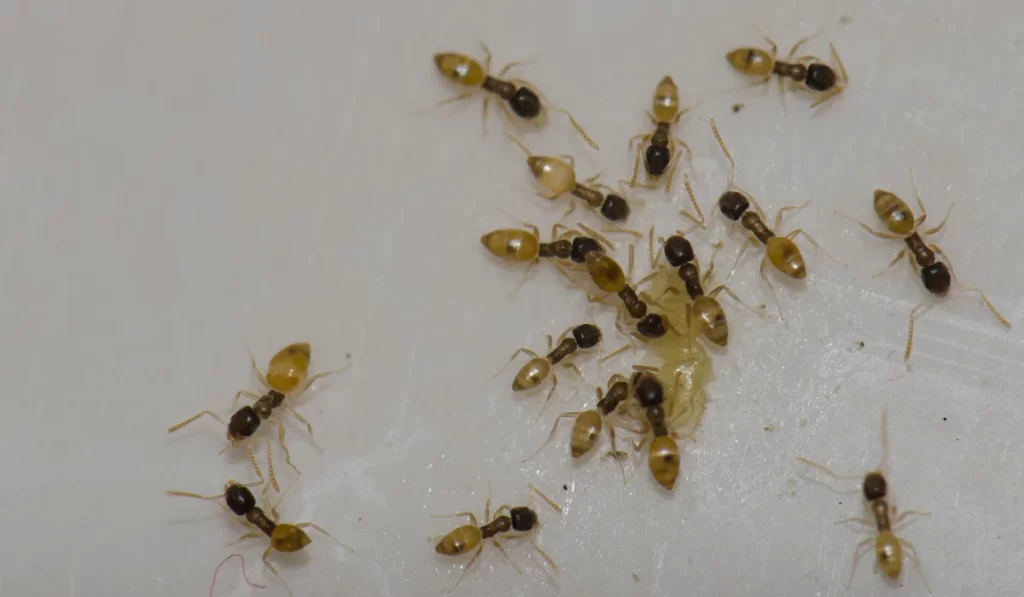
Ghost ants are a headache many Florida homeowners know all too well. Did you know that Ghost ants are among the top 5 most reported indoor ant problems in Florida? With their tiny size, pale legs, and dark head, they’re almost invisible, until suddenly, your baseboards are crawling with them. If you’ve found yourself Googling how to get rid of ghost ants more than once, it’s time for a serious plan of action.
Here’s a breakdown of how to deal with ghost ant problems, and when it’s time to bring in a professional pest control company.
Key Takeaways
- Ghost ants are attracted to sweet foods and can nest in leaf litter, mulch, or inside wall voids.
- Ant trails follow pheromones and often lead through cracks and crevices that need sealing with caulk or sealant.
- Ant baits are safer and more effective than sprays because they wipe out the entire ghost ant colony over time.
- Pest control experts know how to find ghost ants, treat the infestation, and stop new colonies from forming.
Clean Up Their Food Sources
Whether it’s sugar ants in your pantry or ghost ants along your counters, the root issue is usually food. These ants are drawn to syrups, crumbs, and even greasy residue.
Outdoors, colonies can thrive on honeydew secreted by aphids and other soft-bodied insects feeding on your landscaping. If you have greenhouses or garden beds nearby, keep an eye on leaf litter and mulch, as these can be ideal nesting sites.
Your first step in ghost ant control?
Deep cleaning. Wipe down food prep areas, remove open trash, and never leave pet food out overnight.
Disrupt Their Pheromone Trails
Ghost ants rely on signals, pheromones, to guide worker ants between food sources and the nest. You may spot these tiny ant trails running along the edges of walls, near electrical outlets, or along door frames.
Disrupting these trails with vinegar or essential oils can act as a temporary repellent and buy you time to deploy more effective ant control strategies.
Seal Up Entry Points (Even the Small Ones)
One of the biggest mistakes homeowners make is underestimating how ghost ants are getting in. With their small size, they can sneak in through crevices around window frames, plumbing, and even light fixtures. Use caulk or another durable sealant to block off these access points.
In humid Florida climates, it’s also wise to check for excess moisture around the home, something that draws not just ants but also cockroaches, termites, and other unwanted guests.
Use Ant Baits the Right Way
Spraying ghost ants often backfires.
These ants are notorious for budding, which means that if you stress them out, they’ll split into new colonies and spread even faster. That’s why professional pest management pros and exterminators rely on bait stations and ant gel.
Slow-acting ant baits allow worker ants to carry the product back to the nest and share it. The bait works its way through the colony, eventually reaching the queen.
The key is patience and strategic placement, especially in kitchens, bathrooms, and other high-traffic zones.
Watch for Signs of Ghost Ant Colonies and Nesting Sites
You won’t always see where ghost ants are nesting. That’s because they love to hide in protected, humid spots like wall voids, under sinks, or even in potted plants. Outdoors, they may nest in mulch beds, under rocks, or near aphid-infested plants.
If you’re noticing ants in multiple areas, it could mean the colony has split or new colonies are forming.
And remember, just because you’re seeing fewer ants doesn’t mean the problem is solved.
Don’t Confuse Ghost Ants with Other Ant Species
Florida is home to many ant species, and they’re not all the same. Ghost ants are sometimes mistaken for pharaoh ants or odorous house ants because of their small size and preference for sweets.
They also get confused with carpenter ants, which can actually damage wood, or fire ants, which pose a bigger health threat.
If you’re not sure, it’s best to call in a pest control expert who can identify the species and customize a treatment plan.
Skip the DIY If Things Get Out of Hand
We’re all for a good DIY project, but ghost ant infestations aren’t the time to experiment with boric acid mixtures or repellent sprays from the hardware store.
They are persistent, and a poorly timed or incorrect treatment can make things worse by spreading the infestation or creating satellite colonies.
That’s why more and more Florida homeowners trust professional pest control when they start seeing ghost ants again and again.
From pinpointing entry points and applying targeted treatments to long-term prevention, pest control experts bring the training and tools needed to stop these ants for good.
Tired of Chasing Ghost Ants? Let Us Handle It
When ghost ants overrun your home, it’s time to take real action. At Rowland Pest Management, we’re not just another pest control company. We’re local experts trained to deal with ghost ant infestations in Florida homes just like yours.
Our pros can identify ant species, seal entry points, and use baiting methods that eliminate the entire colony. We’re big on doing things the right way, because that’s how you get long-lasting results.
Whether you’re in Winter Park, Orlando, or New Smyrna Beach, our pest control specialists are ready to help.
Call now for a free inspection, and let’s get rid of ghost ants before they get out of hand.
Frequently Asked Questions
Still have questions about ghost ants? Here are a few common ones we hear from Florida homeowners just like you:
Can ghost ants damage my electronics or appliances?
Ghost ants are known to crawl into electronics and appliances seeking warmth or moisture, which can lead to short circuits, power issues, or internal damage if they nest in those spaces.
What attracts ghost ants even when my home is clean?
Even in clean homes, ghost ants can be drawn to pet food, moisture around sinks, and sugary drinks spilled under appliances or inside cabinets that are easy to miss during regular cleaning.
Are ghost ants active year-round in Florida?
Yes, Florida’s warm climate allows ghost ants to stay active all year. Without seasonal die-offs, infestations can persist or worsen if not treated with ongoing professional pest control strategies.