


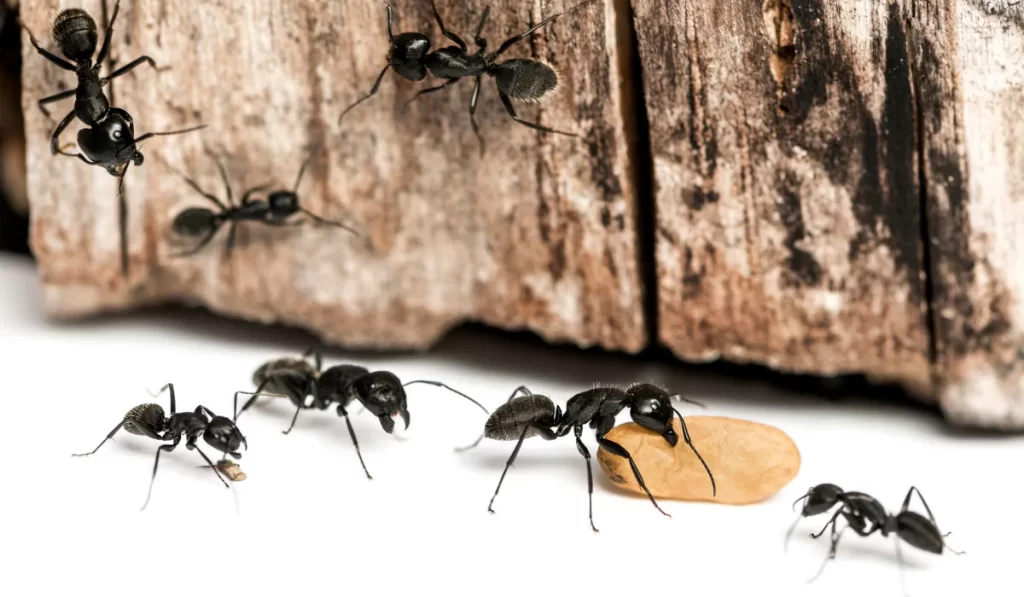
Central Florida homeowners are no strangers to seeing ants in the kitchen, bathroom, or even the basement. But not every ant infestation is the same. One type of ant that causes a lot of confusion is the carpenter ant, often mistaken for common black ants, especially the little black ants frequently seen in homes.
Let’s clear up the confusion and break down the real differences.
Key Takeaways
- Carpenter ants are bigger than black ants and tunnel through moist wood, while black ants just hunt for food.
- Only carpenter ants can damage wood and threaten your home’s structure if not caught and treated early.
- Sawdust, rustling in walls, and winged ants around windows are strong signs of carpenter ant activity.
- DIY methods miss hidden nests, which is why professional pest control is the best way to stop them.
Carpenter Ants vs. Black Ants: Key Differences
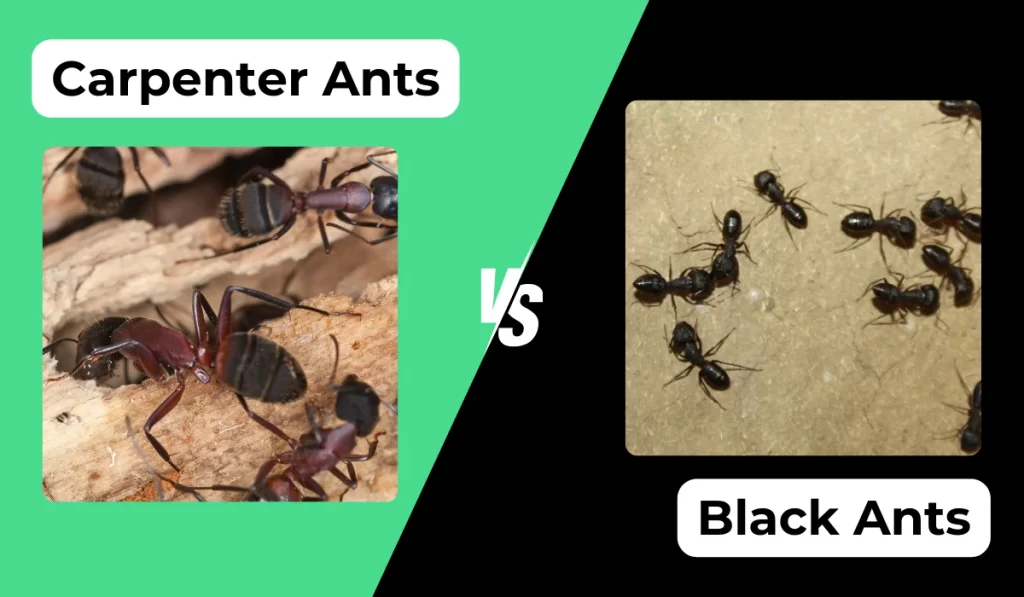
Not sure which kind of ant you’re dealing with? Here’s a quick breakdown of the most noticeable differences between carpenter ants and black ants.
| Features | Carpenter Ants | Black Ants |
|---|---|---|
| Size | Larger (¼” to ½”) | Smaller (1/16″ to ⅛”) |
| Color | Usually black, but can be red or dark brown | Jet black or dark brown |
| Thorax Shape | Smooth, rounded thorax | Uneven thorax |
| Petiole Segments | One petiole node | Two nodes |
| Antennae | Bent or elbowed antennae | Bent or elbowed |
| Nesting Habits | Excavate into wooden structures, especially moist wood | Nest in soil, crawlspaces, behind baseboards |
| Diet | Honeydew from aphids, dead insects, sugars, proteins | Carbohydrates, sugary snacks, pet food |
Why It Matters to Know the Difference
Telling carpenter ants and black ants apart isn’t just about what they look like. The real difference comes down to what they do, and what kind of damage they can cause.
Here’s why it matters, and what signs to watch for around your home.
One Threatens Your Home’s Structure, The Other Doesn’t
Carpenter ants might not eat wood like termites, but they still destroy it to build nests.
Over time, their tunneling creates damaged wood that compromises your home’s framing, especially in humid or wet spots like wall voids, crawlspaces, or basements. That’s why identifying a carpenter ant infestation early can save you serious money.
On the flip side, house ants, like little black ants, don’t go after wood. They’re more likely to raid your kitchen for sweet food or carbohydrates.
So if your ant issue is more of a pantry problem than a structural one, it’s probably not carpenter ants.
What the Clues Say About the Kind of Ant
Finding small piles of sawdust near a baseboard or windowsill? That’s a telltale sign of a carpenter ant nest. The sawdust, also known as frass, is chewed-out debris from their burrowing activities.
If you hear a rustling sound in the walls or see winged ants emerging from holes, you might be dealing with a mature carpenter ant colony.
Look closely: black carpenter ants have a heart-shaped head, prominent mandibles, and a rounded thorax, features not found on other species of ants.
DIY Mistakes Can Make the Problem Worse
When it comes to ant control, using the wrong strategy can backfire. DIY bait traps made for common ants won’t touch a deep-seated carpenter ant colony tucked into your wall studs.
To get rid of carpenter ants, you need professional-grade solutions. That’s where pest control services like Rowland come in. We don’t just eliminate the worker ants, we track down the carpenter ant nest and remove it at the source.
Entry Points and Nesting Habits Vary
Both ants can enter through tiny entry points, cracks in your foundation, gaps around windows, or even along plumbing lines. But their nesting habits are very different.
Carpenter ants favor moist wood, especially areas with existing water damage. Think wall voids, decks, and eaves. Black ants, however, build in soil and follow pheromone trails to food sources.
The Right Pest Control for the Right Ant
There’s no one-size-fits-all approach to ant problems. At Rowland Pest Management, we combine expert identification with precision treatment.
Whether you’re facing a kitchen full of black ants or a carpenter ant infestation threatening your structural integrity, our experts identify the source and apply targeted treatments that work.
Request an expert inspection today to identify your ant invaders and take back your home.
Frequently Asked Questions
Still have questions about the ants in your home? Here are a few things homeowners often ask that might help you out.
Can carpenter ants and black ants live in the same home?
Yes, both types of ants can live in the same home at once because they look for different nesting spots and food sources.
Are carpenter ants dangerous to pets or people?
Carpenter ants don’t carry diseases, but they can bite if threatened. The real danger is the structural damage they cause over time.
Do weather changes affect carpenter and black ant activity?
Yes, both types become more active during warmer months. Heavy rain or humidity can also push carpenter ants indoors to find dry nesting areas.