
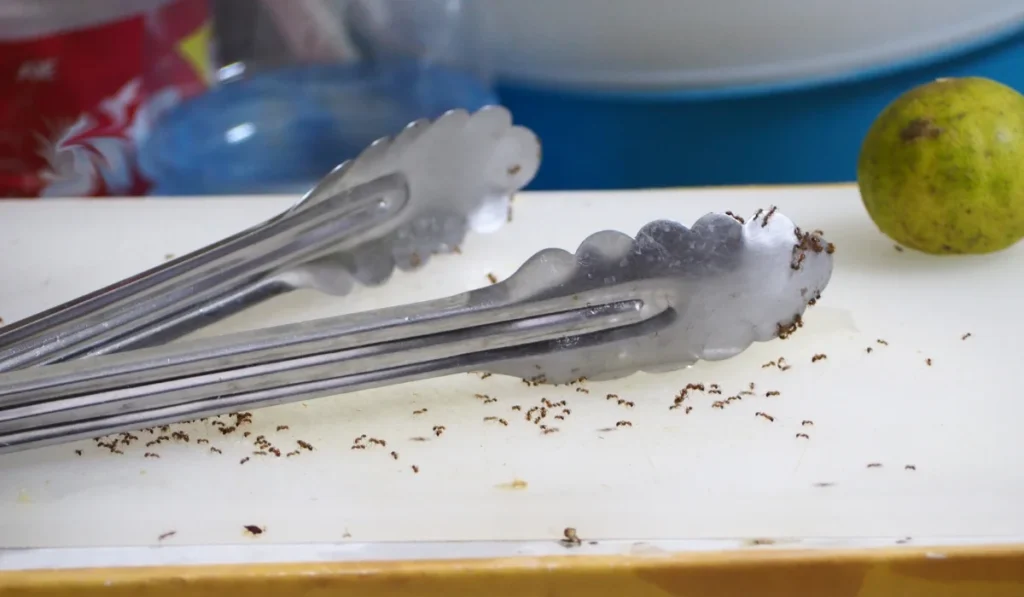
Ants in your kitchen are among the most common service calls we get in Orlando, and they rarely start as a major issue. Most homeowners first notice a few tiny ants on kitchen counters, usually near a spill or crumbs that were missed during cleanup.
Within a few days, that small sighting turns into steady ant trails running along baseboards, across countertops, and around windowsills.
Florida heat plays a big role in how fast this builds. Ant colonies stay active year-round, so they don’t slow down as they do in colder states. Once worker ants find a food source, they keep coming back and bring more with them.
If you want to get rid of ants for good, quick DIY fixes won’t cut it. You need to remove what’s attracting them and stop how they’re getting inside.
Key Takeaways
- Ants follow scent trails and return to the same food sources until the colony is removed
- Most DIY methods only kill worker ants, not the ant colony
- Sealing entry points and removing food sources matters as much as treatment
- Professional pest control focuses on baiting, inspection, and long-term prevention
How to Get Rid of Ants in Your Kitchen
Getting control of an ant problem or pest control in Orlando, FL, takes a clear process. Skip steps, and the ants come right back.
Find and Follow Ant Trails
Start by watching how ants move. Ant trails form when worker ants leave pheromones behind. These scent trails guide other ants to food.
Look along baseboards, door frames, and windowsills. Trails usually lead to a food source or to a crack where ants enter. This step helps you locate activity fast.
Clean Up Food Sources Immediately
Ants stay because your kitchen provides easy access to food. Crumbs, grease, and spills on countertops keep them active.
Wipe down kitchen counters each day. Store food in sealed containers. Keep pet food picked up after feeding. When you remove the source of food, activity drops.
Use Ant Bait Instead of Sprays
To get rid of ants long-term, use ant bait instead of a quick ant killer spray. Products like Terro combine sugar with borax to attract worker ants.
Worker ants carry the bait back to the ant colony. This spreads through the colony and reaches the queen. That’s how you stop the problem at the source.
Avoid spraying directly on ant trails during this step. Sprays disrupt the trail but don’t fully address the issue.
Apply Targeted DIY Treatments
Some home remedies help when used in the right spots. Mix equal parts water and white vinegar in a spray bottle. Spray along baseboards and entry points to break scent trails.
A mix of baking soda and sugar can also help reduce activity. Dish soap mixed with water can kill ants on contact by breaking down their exoskeletons.
Diatomaceous earth works as a dry barrier. It damages the exoskeleton and dries ants out. Keep it in dry areas for best results.
Essential oils like peppermint and tea tree oils act as repellents. They help push ants away but do not remove the ant colony.
Seal Entry Points Around the Kitchen
Ants enter through small gaps you may not notice. Check windowsills, door frames, and areas near plumbing.
Use caulk to seal these entry points. This home improvement step reduces new activity and helps keep ants out.
Why Ants Keep Coming Back to the Kitchen
Even after treatment, many homes still deal with repeat ant infestations. There’s usually a clear cause.
Scent Trails Are Still Active
Ants rely on pheromones to guide worker ants. If scent trails remain, new ants follow the same path.
Cleaning with vinegar or dish soap helps break these trails and reduce repeat traffic.
The Ant Colony Was Never Eliminated
Killing visible ants does not solve the full problem. Worker ants are only part of the colony.
If the queen and ant nests remain active, the colony continues sending worker ants inside.
Hidden Food Sources Are Still Available
Even clean kitchens can have hidden food sources. Grease under appliances, crumbs behind cabinets, or open pet food can feed ants.
Sugar ants and odorous house ants are common in Orlando. These types of ants stay active when food is available.
Entry Points Were Not Sealed
If entry points stay open, ants will keep coming inside. Small cracks near baseboards, windowsills, and door frames are common problem areas.
Sealing these gaps with caulk is one of the most effective long-term steps.
When Ants Become Hard to Control
Some ant infestations reach a point where DIY methods no longer work. Here are signs it’s time to bring in an exterminator.
Multiple Ant Trails Appear Daily
If you see several ant trails forming in different areas, the colony is well established. This often means multiple entry points or nearby ant nests.
Different Types of Ants Are Present
Seeing different species of ants, like pharaoh ants, carpenter ants, or tiny ants, points to a larger pest issue.
Each type of ant responds differently to treatment, which makes control harder.
Ants Spread Beyond the Kitchen
If ants move into other rooms, the infestation has grown. You may see activity in bathrooms, garages, or near appliances.
At this point, basic home remedies won’t solve the issue.
DIY Treatments Stop Working
If ant bait, baking soda mixes, or repellents stop working, the colony has adapted or grown larger.
Professional pest management uses targeted baiting and inspection to locate the nest and eliminate it.
Schedule Ant Control for Your Orlando Kitchen
If ants keep coming back, it’s time to bring in a professional. At Rowland Pest Management, we handle ant control the way it should be done.
We start with a full inspection of your home. Our technician looks for entry points, ant trails, and signs of ant nests inside and outside. Then we build a treatment plan based on the ant species and the severity of the problem.
Our service includes targeted baiting, perimeter treatments, and sealing access points when needed. We also provide follow-up visits and ongoing pest control to keep your home protected year-round.
We offer fast scheduling, including next-day service in most cases. If you’re dealing with an ant problem in your kitchen, contact us today and schedule your service.
FAQs
Why do I suddenly have ants in my kitchen?
Ants enter your home when they find food sources and water. Even small crumbs or spills can attract worker ants.
What is the best way to get rid of ants permanently?
The best approach is baiting the colony, removing food sources, and sealing entry points. This stops the colony at the source.
Are home remedies like vinegar or baking soda effective?
They can reduce activity and break scent trails, but they usually do not eliminate the ant colony.
When should I call an exterminator for ants?
If ants keep returning, spread to multiple rooms, or DIY methods stop working, it’s time for professional pest control.
Are ants a sign of bigger pest issues?
Sometimes. Large ant infestations can point to moisture problems or structural gaps that also allow other pests, including termites, to enter.