
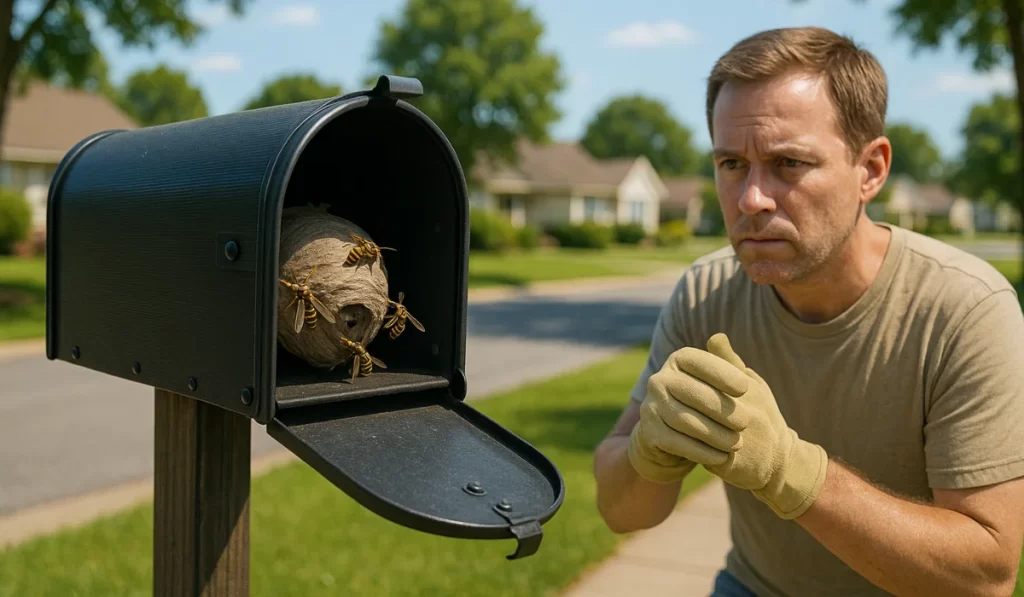
Many Florida homeowners find wasps nesting in their mailboxes. In Central Florida, warm weather, high humidity, and long nesting seasons make mailboxes an easy nesting spot for wasps. These small spaces stay dry, retain heat, and provide wasps with a quiet place to build nests.
Mailboxes may seem harmless, but wasp activity inside or around them can quickly create a safety issue. When someone reaches into a mailbox, the movement can trigger defensive behavior and lead to painful wasp stings. These stings put homeowners, children, pets, and mail carriers at risk. In many cases, USPS will stop mail delivery until a homeowner resolves the stinging insect problem.
This guide explains why wasps choose mailboxes in Florida, which species are common, how to handle small nests safely, and when to call a professional for wasp removal in Central Florida. You will also learn how to stop nests from coming back so your mailbox stays clear year-round in Central Florida.
Key Takeaways
- Several species of wasps build nests inside mailboxes, posts, and nearby eaves throughout Florida. These sheltered areas provide warmth and protection, allowing colonies to grow quickly if left alone.
- Correctly identifying the type of wasp helps determine the safest nest removal and prevention steps. Different species respond differently to disturbance, which affects how professional pest control technicians handle the problem.
- DIY methods may work for small nests with low wasp activity. Larger infestations or aggressive species often require professional pest control to avoid stings and repeat problems.
- Ongoing prevention helps protect mail carriers, outdoor spaces, and your household year-round. Simple steps combined with professional support reduce the chance of nests returning in Florida’s long warm season.
Video Guide: What’s The Difference Between Bees, Wasps, Yellow Jackets, And Hornets?
This video explains the differences between bees, wasps, yellowjackets, and hornets in a clear, visual way. Watching it helps you identify what’s nesting in your mailbox before taking action. Understanding these differences protects pollinators like honeybees, prevents unsafe DIY mistakes, and helps you share accurate details when contacting a pest control service in Central Florida.
Why Wasps Choose Mailboxes In Central Florida
Wasps look for places that offer shelter, warmth, and little disturbance. Mailboxes meet all three needs. Whether metal or plastic, a mailbox works like a ready-made nesting space. The door blocks rain, and the short daily opening rarely disrupts nesting.
Paper wasps, yellowjackets, and mud daubers often build nests in mailboxes because these spaces stay dry and warm. In Central Florida, the climate lets wasps stay active for much of the year. Even during cooler months, sunlight can keep mailbox interiors warm enough for larvae to grow.
Neighborhoods in Orlando, Winter Park, Kissimmee, and nearby areas often have shrubs, lawns, and flowering plants near curbside mailboxes. These outdoor spaces attract insects that wasps hunt, giving them a nearby food source. When food and shelter are close together, infestations can grow quickly.
If you see steady wasp activity near your mailbox lid, post, or flag mount, a nest is likely present or forming. At Rowland Pest Management, we offer wasp control services that treat mailboxes and nearby areas to stop nesting before it spreads.
Species Of Wasps Commonly Found In Florida Mailboxes
Identifying the species of wasps you’re dealing with, like differentiating between paper wasps and yellowjacket wasps, is an important first step when nests appear in or around your mailbox. Different species of wasps behave in different ways, build various types of nests, and respond differently when disturbed.
Knowing the wasp type helps you decide if DIY removal is safe or if professional pest control is the better choice, especially in Central Florida, where wasps stay active most of the year.
Paper Wasps And Paper Wasp Nests
Paper wasps are one of the most common wasps found in Florida mailboxes. They have slim bodies, long hanging legs, and build umbrella-shaped nests from chewed wood. These nests are open, so you can easily see the hexagon cells and growing larvae.
Paper wasps often attach nests to the mailbox lid, the inside ceiling of the box, or nearby surfaces. Paper wasps are less aggressive than yellowjackets, but they will sting if the nest is disturbed, especially when protecting larvae.
Yellowjackets And Yellow Jacket Nests
Yellowjackets are aggressive and pose a high risk around mailboxes. They have thicker bodies with bright yellow and black markings, and their enclosed nests hold large numbers of wasps.
A yellowjacket nest may hide inside hollow mailbox posts, underground near the base, or in nearby voids. Because these nests are well protected, disturbing them can cause swarm attacks. Swarm attacks increase the risk of multiple stings and make DIY removal unsafe in most cases.
Mud Daubers
Mud daubers are solitary wasps that build tube-shaped nests from dried mud. They often build nests inside mailboxes, on posts, or near eaves.
Mud daubers rarely sting and do not swarm, so they are less dangerous than other wasps. However, their nests can block mail and clutter the mailbox. Over time, several small nests may attract other wasps, leading to a larger problem.
Hornets And Hornet Nests
True hornets rarely nest inside mailboxes but often build nests nearby. Hornet nests are enclosed, paper-like, and usually attached to trees, soffits, or structures near the mailbox.
Hornets aggressively defend their nests and react quickly to movement or vibration. Disturbing a hornet nest can cause multiple stings in a short time. Because these nests grow large and hold many hornets, DIY removal is unsafe and not recommended.
Wasp Activity, Wasp Stings, And Safety Concerns
Wasp activity near mailboxes increases the risk of stings because people open them every day. Wasps protect their nests and react aggressively to vibration, movement, and noise.
Opening or closing the mailbox can trigger attacks, especially when nests hide under the lid, inside the box, or in the post. Even brief movement can cause several wasps to rush out at once. When wasps nest in your mailbox, knowing the proper steps helps you avoid stings and delivery problems.
Wasp stings cause immediate pain, swelling, redness, and burning that can last for hours or days. Repeated stings or stings to the face, neck, or hands can cause stronger reactions.
According to the University of Florida Health, people allergic to wasp venom may have a serious reaction to a sting. One sting can cause trouble breathing, dizziness, or throat swelling and needs urgent medical care.
Children, pets, and mail carriers face a higher risk because they may not notice a nest before disturbing it. Pets sniffing mailbox posts and children grabbing mail face a high risk of sudden attacks.
Mail carriers also face risk, which is why USPS stops delivery when stinging insects are present. If wasps stop mail delivery, USPS will hold your mail until a homeowner resolves the problem.
DIY Steps For Small Nests Only
DIY solutions can help in limited cases, but they are not always safe or effective. In Florida’s climate, wasps become defensive quickly, and nests often grow faster than expected.
Before trying DIY removal, you need to know what is safe to handle and when to call a professional. DIY removal should only happen when the nest is small, easy to reach, and has little wasp activity. Even then, you must use caution, especially with stinging insects in tight spaces like mailboxes.
Assessing Small Nests
DIY removal works best when nests are small, and wasp activity is low. Small nests are usually no bigger than a golf ball and have only a few adult wasps coming and going.
These nests are often new and appear under the mailbox lid or inside the ceiling, which is why USPS recommends collecting mail daily. Frequent wasp activity, guard wasps at the entrance, or nests inside posts usually signal an established colony. Larger nests hold growing larvae and more wasps, which raises the risk of stings when disturbed. In these situations, DIY removal is not safe.
Using Wasp Spray And Insecticide Carefully
For small paper wasp nests, a labeled wasp spray can sometimes work. Apply spray from several feet away in the early morning or late evening when wasps are less active and inside the nest. Follow label instructions and wait at least 24 hours before removing the nest.
Avoid mixing cleaners or using unapproved pesticides, as this can damage the mailbox, harm pollinators, or cause health risks. Never spray into enclosed spaces, mailbox posts, or areas where chemicals can linger. Do not spray above your head or in windy conditions, as this increases exposure risk.
Natural Deterrents With Peppermint Oil
You can use peppermint oil as a mild deterrent after you’ve had the nest removed or when wasp activity is minimal. Mix a few drops of peppermint oil with water and lightly mist the mailbox interior, hinges, and post. The strong scent may help reduce wasp activity and discourage new nests from forming.
This method works best for prevention, not active nests. Reapply weekly during peak wasp season in Central Florida, especially after heavy rain.
When DIY Is Not Safe
You should never try to remove yellowjackets, hornets, or their nests on your own. Professionals must handle nests inside posts, ground voids, or hidden cavities. These situations can escalate quickly and cause multiple stings.
If you feel unsure at any point, stop and call a professional. If DIY methods feel unsafe or don’t work, we treat mailboxes and the surrounding areas across Central Florida.
Why Wasp Infestations Escalate Quickly In Florida
Florida’s climate allows wasps to build nests and grow colonies quickly. Once eggs hatch, larvae grow fast, especially when food is nearby.
One or two scouting wasps can turn into a full infestation within weeks. In Central and South Florida, wasps may stay active almost year-round. Mild winters rarely disrupt nests, and sunny days keep mailboxes and posts warm during cooler months.
These conditions cause wasps to return to the same nesting sites again and again. When residue, scent trails, or small gaps remain, new wasps often build nests in the same spot. Removing a nest without fixing mailbox conditions usually leads to repeated problems.
Effective control requires cleaning residue, sealing entry points, and reducing nearby attractants. Professional pest control focuses on nest removal and long-term prevention to stop repeat infestations.
When To Call A Professional Pest Control Service
In some situations, calling a professional pest control service is the safest option. If a nest is larger than a golf ball, the colony is likely established and protecting larvae. Heavy wasp activity around the mailbox, especially guard wasps at the entrance, increases the risk of stings and makes DIY removal unsafe.
Nests inside mailbox posts, underground, or hidden in voids are dangerous because disturbing them can trigger swarm attacks. Professional help is especially important when yellowjackets or hornets are present.
If USPS has suspended mail delivery due to stinging insects, the issue needs immediate attention. Delaying treatment can lead to more stings, larger infestations, and longer delivery stops.
At Rowland Pest Management, we use a process designed for Florida conditions. Our technicians identify the species and inspect the entire area. We apply targeted treatments using professional-grade pesticides, followed by complete nest removal. Treatments often include the mailbox, post, nearby eaves, and surrounding areas where wasps may nest.
Respecting Pollinators And Honeybees
Not all flying insects near your mailbox are pests. Honeybees and other pollinators support plants, gardens, and local ecosystems in Florida.
Honeybees have fuzzy bodies, slower flight, and pollen baskets on their legs. They behave differently from wasps and are less aggressive unless threatened. If you suspect a bee nest instead of a wasp nest, pause before taking action.
In many cases, a beekeeper can safely relocate honeybees. Relocation protects pollinators while resolving the issue. However, relocation is not always possible based on the nest’s location and condition.
When a beekeeper is not an option, we can evaluate the situation and suggest a safe solution. The goal is to protect people, mail carriers, and pets while respecting beneficial insects, especially in Central Florida, where pollinators remain active year-round.
Prevention That Works Year-Round In Florida
Prevention matters in Florida because wasps stay active for much of the year. Warm temperatures and sunlight let new colonies form quickly, even outside of summer.
Without regular prevention, wasps may return to the same mailbox, especially if conditions stay the same. After nest removal, clean the mailbox with soap and water to remove any remaining wasp residue. Seal cracks and gaps in the mailbox, lid, and post to reduce nesting spots.
Trim nearby plants because they support insects that wasps feed on. Applying peppermint oil during peak season can help discourage wasp activity around the mailbox.
Some homeowners use decoy nests to make the area look occupied and discourage new colonies. Place decoy nests several feet from the mailbox so they do not affect USPS delivery.
Routine inspections help prevent wasp nesting. Checking the mailbox and the nearby area each week helps you spot small nests early.
Making The Right Wasp Control Choice For Central Florida Homes
Mailbox wasp problems can disrupt daily routines and pose safety concerns if not handled properly. Choosing the proper response depends on the situation, including nest location, wasp behavior, and the level of risk involved. Taking action at the right time helps limit exposure and prevents the issue from growing into a larger disruption.
At Rowland Pest Management, we provide mailbox-focused wasp control for Central Florida homes, with services designed to address active nests and reduce the chance of repeat issues.
Contact us today to schedule an inspection or service visit and restore safe, uninterrupted mail access.
FAQs
Why are wasps attracted to my mailbox in Central Florida?
Mailboxes offer warmth, shelter, and protection from the rain. Paper wasps, yellowjackets, and mud daubers prefer small spaces with little disturbance. Florida’s warm climate allows nests to grow fast if homeowners do not check mailboxes often.
Should I call a beekeeper or pest control service?
Fuzzy insects carrying pollen are often honeybees, and a beekeeper may relocate them. Wasps, yellowjackets, and hornets act aggressively when disturbed. In Central Florida, professional pest control should handle wasp nests, especially in mailboxes or posts.
Can I move my mailbox to stop wasps?
Moving a mailbox alone does not stop wasps. If nearby shelter, food sources, or gaps remain, wasps may return. Cleaning residue, sealing gaps, and regular inspection are more effective than relocation alone.