

Wasp season hits hard in Central Florida, especially in the warmer months when social wasps start building nests around homes. Wasps look for quiet, sheltered places to build nests and protect their young. That means your home’s eaves, garages, and attics can quickly become hotspots for infestation.
One or two wasps outside might not seem like a big deal. However, ignoring early signs can lead to a painful sting or a fully established nest of wasps threatening your home and family!
In this guide, we’ll show you how to spot signs early, understand the risks, and take action using innovative prevention or professional pest control services.
Key Takeaways
- Wasps often build nests in quiet, protected areas, such as wall crevices, garages, or under eaves.
- If you hear buzzing or notice more wasps around your home, you may be dealing with a wasp problem.
- Proper identification of the wasp type can help you determine its level of danger.
- Hiring a licensed exterminator is the safest way to eliminate wasps.
Familiar Places: Wasps Build Nests Around Homes
Wasps, especially paper wasps, hornets, and yellowjackets, prefer to build nests in locations that offer protection from weather and predators. You’re most likely to find nests in or around:
- Eaves, awnings, and overhangs
- Sheds, garages, attics, and crawlspaces
- Porch railings, behind shutters, or fence posts
- Gaps in siding or rooflines
- Tree branches or deck undersides
Mud daubers build unique tube-shaped nests using mud, usually on ceilings or walls. Meanwhile, hornet nests often hang high in trees or at the corners of buildings.
Key Signs of a Wasp Nest Near Your House
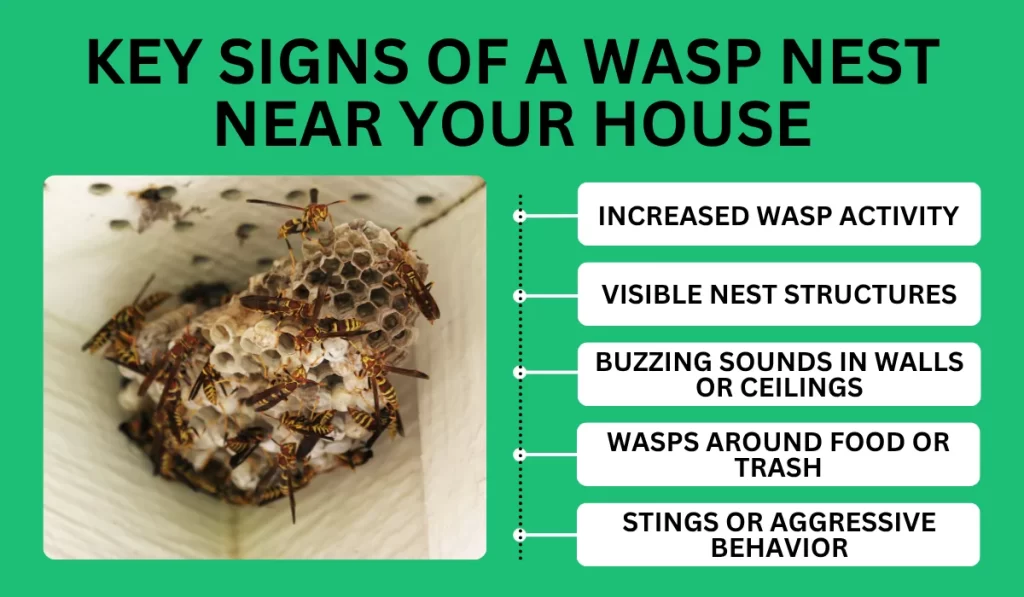
1. Increased Wasp Activity
When you notice wasps flying back and forth in the same area, especially near eaves or roof corners, it usually means there’s a nearby nest. You will likely find their nest by keeping a close watch on your outdoor lights, shaded spaces, and vents.
2. Visible Nest Structures
You might notice a paper wasp nest hanging from beams or tucked into dark corners. These papery structures grow fast and can house dozens of wasps in just a few days. Over time, wasp nests can expand to the size of a soccer ball, making wasp nest removal more dangerous without the right tools and insecticide.
3. Buzzing Sounds in Walls or Ceilings
If you hear a faint buzzing coming from inside the walls or above the ceilings, wasps have likely entered your home’s walls or attic. This often means they’re nesting inside wall voids or attic areas. The buzzing sound may sound louder during the colony’s peak activity time during daylight hours. However, if the sound grows consistently louder over time, the population has likely increased significantly, and you have a full-blown wasp infestation that requires immediate attention.
4. Wasps Around Food or Trash
The sweet and pungent odors that sweet drinks, meat scraps, and uncovered garbage emit can quickly attract wasps. If you notice them hovering near grills, trash bins, or patio tables, they may be nesting nearby. Wasps often follow scent trails and can return to the same food source repeatedly.
5. Stings or Aggressive Behavior
Wasps become more aggressive when protecting their young. Getting a wasp outside your home is a strong warning, especially from species like yellow jackets, which are known for swarming, to stay away from their nest. Multiple stings from wasps can trigger allergic reactions and lead to a medical emergency.
Understanding the Different Types of Wasps in Florida
Florida is home to several types of wasps, each with different behavior:
- Paper Wasps build umbrella-shaped nests and tend to be less aggressive unless disturbed.
- Yellow Jackets are highly aggressive and often nest underground or inside walls.
- Bald-Faced Hornets create large, closed hornet nests and defend them fiercely.
- Mud Daubers are solitary and rarely sting. They build small mud nests and help control other insects.
Familiarizing yourself with the different types of wasps that may nest in your property can help you choose the right repellent or wasp killer. Knowing what wasp problem you have can also help you understand when it’s time to call pest control experts to help you rid your home of your wasp problem.
Should You Try DIY Wasp Removal?
You can try DIY for small nests. However, it can be a gamble. DIY wasp control often fails to eliminate the colony properly and may even trigger the wasps into defense mode. Wasps protect their larvae and food sources aggressively, and they will swarm if the nest feels threatened.
Products like repellent sprays, wasp killer foams, wasp sprays, traps, or insecticides might reduce the number of wasps flying around, but they don’t always destroy the nest.
If you decide to remove a nest yourself:
- Wear thick, protective clothing
- Use a pesticide or insecticide labeled for wasps
- Work early in the morning or at dusk, when wasps are least active
- Keep children and pets away
Removing a wasp nest from your property by yourself can be done. It’s just not recommended, given how aggressive wasps can get when they feel threatened. This is why most homeowners prefer to call an exterminator instead, to save themselves time as well as stress and stings.
When to Call a Pest Control Expert
If the nest is out of reach, hidden in a wall, or located near areas where people gather, it’s time to call for professional help.
At Rowland Pest Control, we safely remove nests and treat high-risk areas in Orlando, Winter Park, Lake Mary, Deltona, and throughout Central Florida.
Our team can:
- Identify the species of wasp
- Use the proper pesticide treatment
- Safely remove the nest
- Seal off entry points
- Offer long-term protection with pest control services
We also handle related concerns, such as honeybees, bumblebees, and other beneficial insects, with care, because we recognize that not every flying insect should be exterminated.
How to Prevent Wasps From Nesting
A few simple steps can protect your home from another infestation:
- Seal cracks, siding gaps, and small crevices
- Keep trash bins closed and clean
- Use natural or chemical repellents around entry points
- Install screens on vents and attic windows
- Remove old nests during winter to discourage a new colony from moving in by Summer
- Reduce standing water and open food sources outdoors
Preventative pest management goes a long way in keeping stinging insects away for good. By eliminating food sources, sealing entry points, and using targeted repellent or exclusion methods, you reduce the chances of future nests forming.
Regular inspections and seasonal treatments can also help detect early activity before it develops into a full-blown infestation.
Conclusion
Spotting signs of a wasp nest near your house early can make all the difference. If you’re hearing buzzing or seeing more wasps or bees outside, don’t wait. Address the issue before it grows into a painful or dangerous problem.
Don’t wait to get stung to take action! At Rowland Pest Control, we offer fast, safe, and local service to help you eliminate wasps and protect your property. Our experienced team is ready to remove wasps and protect your home safely. Contact us for a free quote or call us to request a same-day service.
FAQs
What attracts wasps to my home?
They look for food, water, and safe places to raise their larvae. Open garbage, sugary drinks, and meat scraps can attract wasps to your home.
Are wasps good for the environment?
Yes. Wasps are pollinators and help control other insects. However, when they build a nest of wasps near people, the risk outweighs the benefit.
Can I remove a wasp nest at night?
Yes, wasps are less active at night. However, without the right tools and protection, it remains a risk. Hire professional pest control services for a hassle-free wasp nest removal instead.
How long does a wasp nest last?
Most nests last for one season. When the weather cools, the colony dies. New queens, however, only hibernate and return in Summerto build new nests.